Static vs Dynamic Sealing
How application type changes everything about your o-ring design
Static Seals
A static seal sits between two surfaces that do not move relative to each other, like a pipe flange or a valve bonnet. Static applications are more forgiving: you can use higher squeeze percentages (15-30%), and material selection focuses primarily on chemical and temperature resistance.
Face seals and boss seals are common static configurations. The o-ring is compressed axially or radially and stays put. Friction and wear are non-issues.
Dynamic Seals
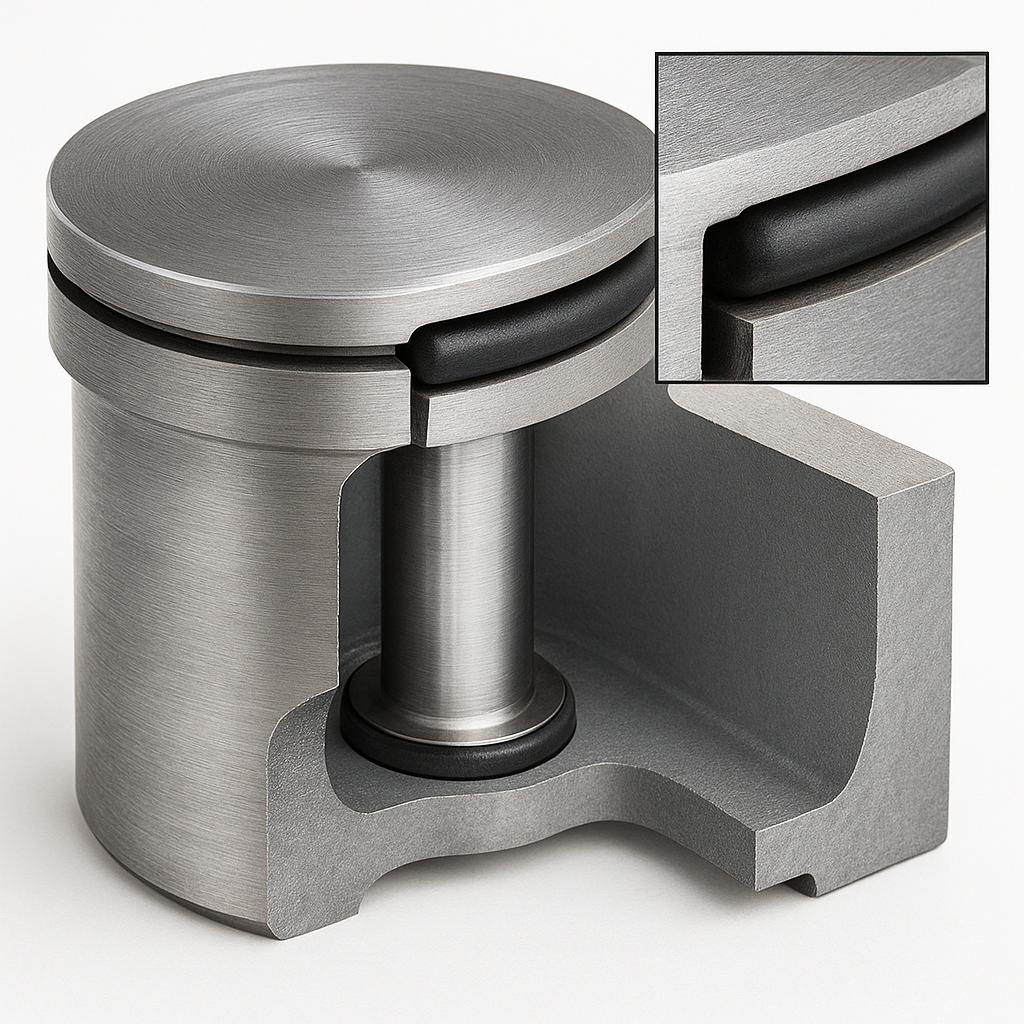
Dynamic seals must accommodate motion: reciprocating (pistons and rods), rotary (shafts), or oscillating. This changes the game entirely. Squeeze must be lower (10-20%) to limit friction and heat generation. Material hardness, surface finish of the mating hardware, and lubrication all become critical factors.
For reciprocating applications, rod seals and piston seals have different gland designs. Rotary shaft seals are limited in speed; above 200 RPM, consider a lip seal instead of an o-ring.
The Gray Area: Semi-Static
Some applications fall between static and dynamic. Thermal cycling causes parts to expand and contract, creating micro-movement. Vibration can cause fretting. These semi-static applications should be designed with dynamic seal guidelines to ensure long-term reliability.