5 Common O-Ring Failures
Identify root causes and prevent costly seal failures in your systems
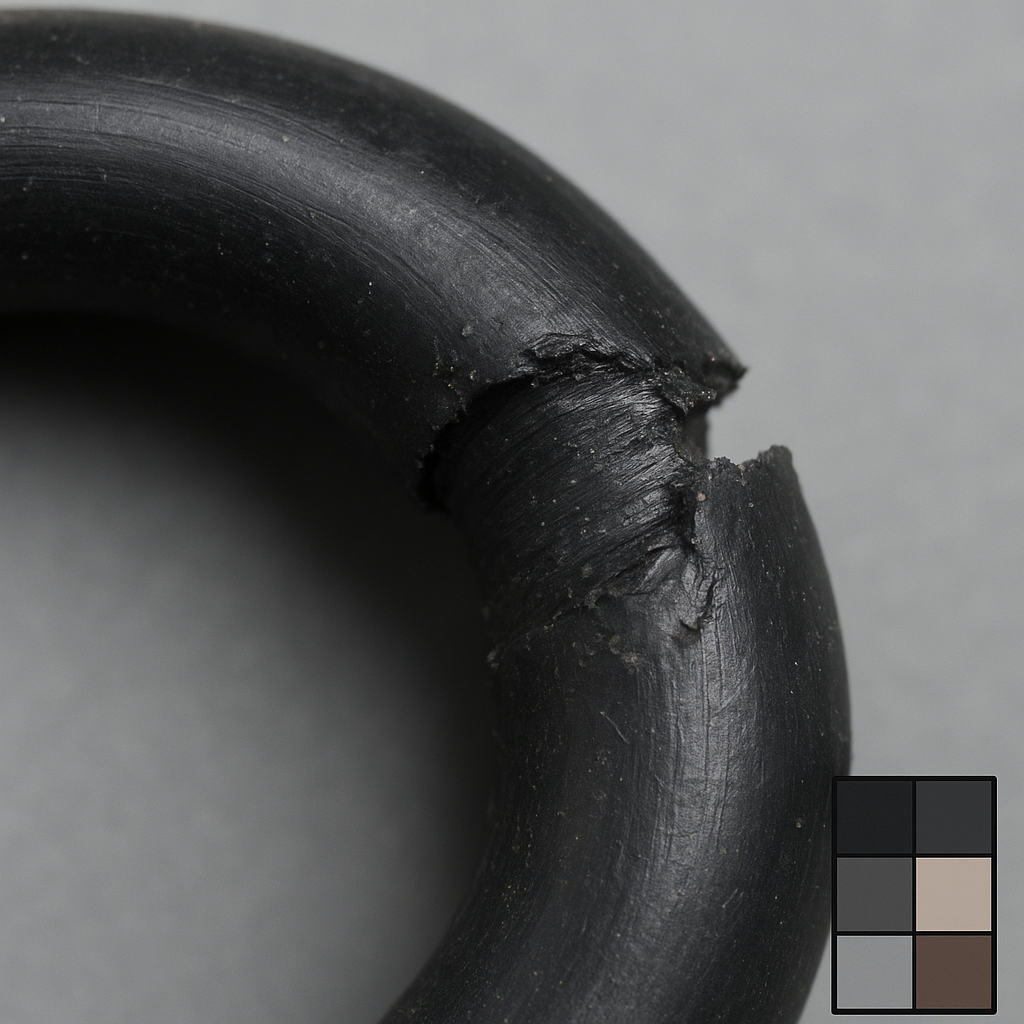
1. Extrusion
When system pressure pushes the o-ring into the clearance gap between mating surfaces, it nibbles and eventually tears. Prevention: use backup rings for pressures above 1,500 PSI and tighten tolerances on the gland.
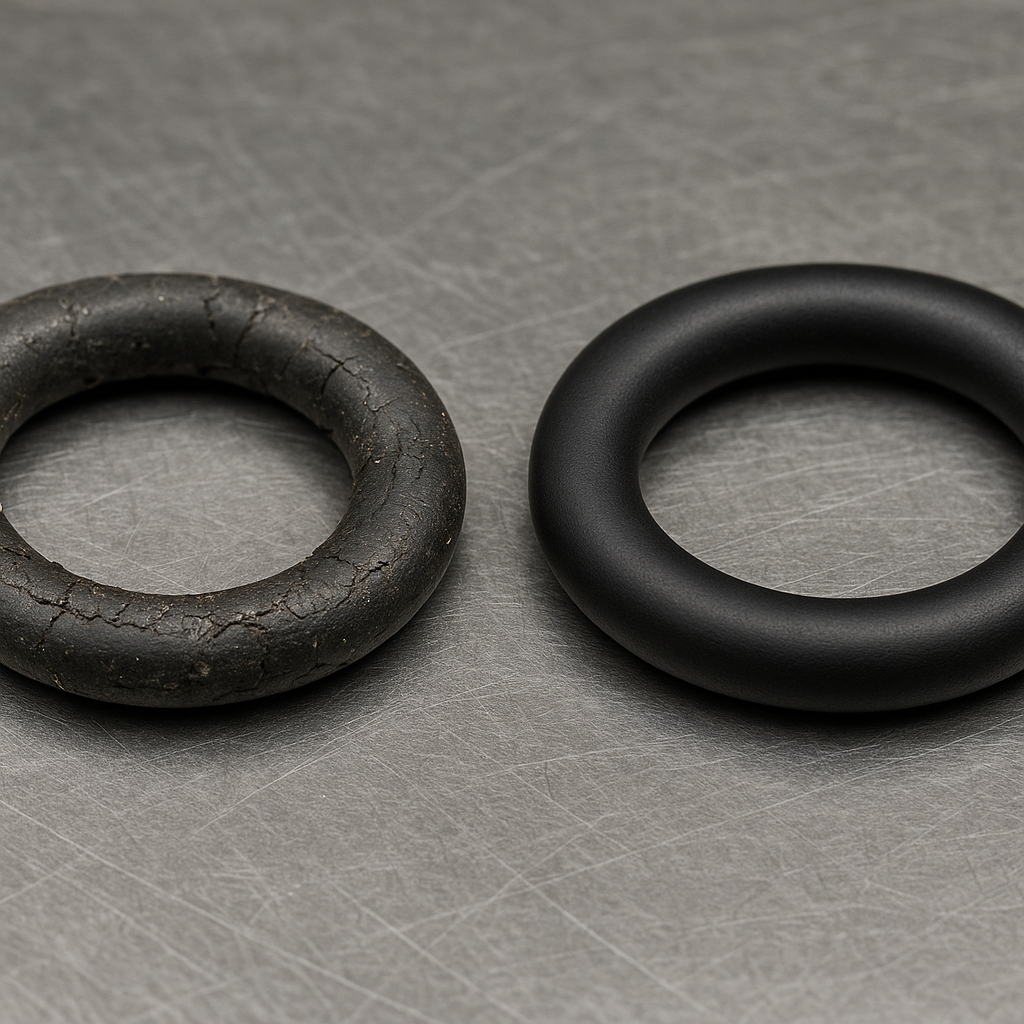
2. Compression Set
Over time, an o-ring loses its ability to spring back to its original shape. This is accelerated by high temperatures. Prevention: choose materials with low compression set values and avoid over-squeezing the seal.
3. Chemical Attack
The wrong material in the wrong fluid will swell, shrink, or dissolve. Prevention: always verify chemical compatibility before selecting a compound. Use published compatibility charts as a starting point.
4. Spiral Failure
In reciprocating applications, the o-ring can twist and develop a corkscrew pattern on its surface. Prevention: use proper lubrication and consider switching to a quad-ring or X-ring profile for dynamic applications.
5. Installation Damage
Cuts, nicks, and pinches during assembly account for a surprising number of field failures. Prevention: use chamfered gland edges, proper installation tools, and light lubrication during assembly.